
Classroom Management Tips for New Substitute Teachers
Disclosure: This post may contain affiliate links. As an Amazon Associate, I earn from qualifying purchases. I may also earn a small commission from other affiliate programs at no additional cost to you. I only share products I truly love or personally recommend. Thank you for supporting my blog!
Introduction: From ER Nurse to Classroom Chaos
I have recently begun substitute teaching in my children’s school district. I have been a stay at home mom for the past decade after working as an ER Nurse and decided it was time for me to go back to work in some capacity. The challenge became trying to coordinate 12 hour shifts with my husband’s schedule and dropping off and picking up my kids from school as well as all the sports practices after school and games on the weekends. I quickly realized that nursing as a career is just not feasible for me in this season of life. My mom is a retired teacher who now subs and encouraged me to go into it as it is flexible and works with my kids’ schedules. She has given me a lot of tips and tricks that I would like to pass on to those who are in a similar situation.
As a brand-new substitute teacher with no background in education, I learned on day one that classroom management is absolutely everything. Just like in the ER, things can go from calm to chaotic in seconds, and once you lose control, it’s very difficult to regain it.
I walked into my first assignment full of enthusiasm, but it didn’t take long to realize that having clear expectations and effective attention-getters are essential. Whether you’re subbing for a kindergarten class or high schoolers, classroom management can make or break your day. And if you are entering substitute teaching from a very different career like myself, I hope that these tips and tricks will help you!
1. Establish Authority Right Away
You don’t have to be harsh, but you do need to project confidence from the start. Even if it is your very first day as a sub, do not let them know! Greet students at the door with a smile, introduce yourself, and make it clear that while you’re not their regular teacher, things may be done different than he or she typically does things but that you expect the same respect and cooperation.
Give brief, clear instructions about your expectations for noise, staying seated, behavior, and participation. A confident presence at the start of the day sets the tone and prevents testing boundaries later.
Pro tip: Write your name clearly on the board and leave it up all day. It shows you’re organized and helps students remember to address you respectfully. I also like to write a brief overview of the day with times (more to keep me on track) but it also gives the kids an idea of what is happening that day).
2. Learn and Use Names Quickly
Even if you only have the class for one day, learning a few names can go a long way. Calling students by name shows attentiveness and reduces misbehavior because they know you’re paying attention. Try getting to the classroom early and make your own seating chart if one isn’t left by the teacher. Typically the students will have name tags on their desks so you can walk around and quickly draft a seating chart to call on kids when needed or interrupt bad behavior. It catches them off-guard as well. You can also use name tents, desk tags, or a quick “roll call” game to memorize names in the first few minutes. I found that I learned a few of their names right off the bat because they were already testing boundaries.
3. Have a Clear Signal to Regain Attention
There will be moments when the class starts buzzing and they feed off each other, that’s normal! What matters is how quickly you can bring them back.
Establish a signal or noise maker right away. Whether it’s a bell, chime, or call-and-response (“Class, class!” / “Yes, yes!”), consistency is key. There are many call-backs that are pretty universal and you can ask the class what their teacher uses.
I have found that because the kids are not used to my voice, the call-backs are not as effective. My go-to is this attention grabbing noise maker and the kids love it.

There are 7 different sounds and it re-directs their attention quickly. I show them during my introduction speech and will make light of it by having them “practice”. I’ll tell them to talk to their neighbor about what they did that weekend and then see how quickly they can respond to the bell sounds.
4. Keep Them Busy, Idle Time Is the Enemy
Students often act out when they’re bored or confused. Follow the lesson plan if one is left, but always have a few backup activities in case it runs short. This happened on my very first day, the kids quickly blew through the worksheets that were left. Some mentioned that they had an art project they needed to complete so I saw that as the perfect opportunity to keep them busy.
Think: quick brain breaks, Go Noodle on YouTube, a “mystery question” game, a Kahoot quiz on a topic they’re learning, or a simple drawing prompt. Keeping transitions smooth reduces downtime (and misbehavior). Sometimes setting a countdown timer helps them know how much longer they will be working on the task at hand. You can find some on YouTube and project it on the whiteboard for them to see. If all else fails, call the office and let them know you’ll be taking the kids out to the field to walk a few laps to get that energy out. Take a radio with you if the site you’re at has them and make sure you have a whistle so you can wrangle them back up when it’s time to return to the classroom.
5. Use Positive Reinforcement
Reward systems work wonders, even for one-day subs. Bring a small “prize box”, stickers, or use verbal praise to motivate students. I created gold tickets that say “Congrats! You earned a trip to the prize box!”. I tell the students first thing in the morning that I will be choosing 5 of the best behaved and most helpful students to pick a prize from my treasure chest. I also reminded them midday because I feel like some of them forgot all about it. I saw an increase in helpful behavior the second half of the day after reminding them. In it are croc charms, fidget toys, keychains, bracelets, 3D printed items and more! I find that they enjoy the novelty of a new prize box if their teacher has their own. Alternatively, a simple “I love how table three is ready!” can redirect the entire class and it encourages other students to seek out that praise. For younger grades, “quiet critters”, passing out stickers, mini-erasers, or candy can make a big difference.
Check out my Amazon idea list for my prize box here
6. Don’t Engage in Power Struggles
If a student challenges you, stay calm and firm. Never raise your voice or argue. That’s a battle you won’t win. Instead, redirect the behavior or use school procedures for discipline if needed. Also, remind them that you will be leaving their teacher a detailed note about how the day went.
Confidence, not confrontation, earns respect. Remember, students are testing limits, not your character.
7. Leave a Detailed Note for the Teacher
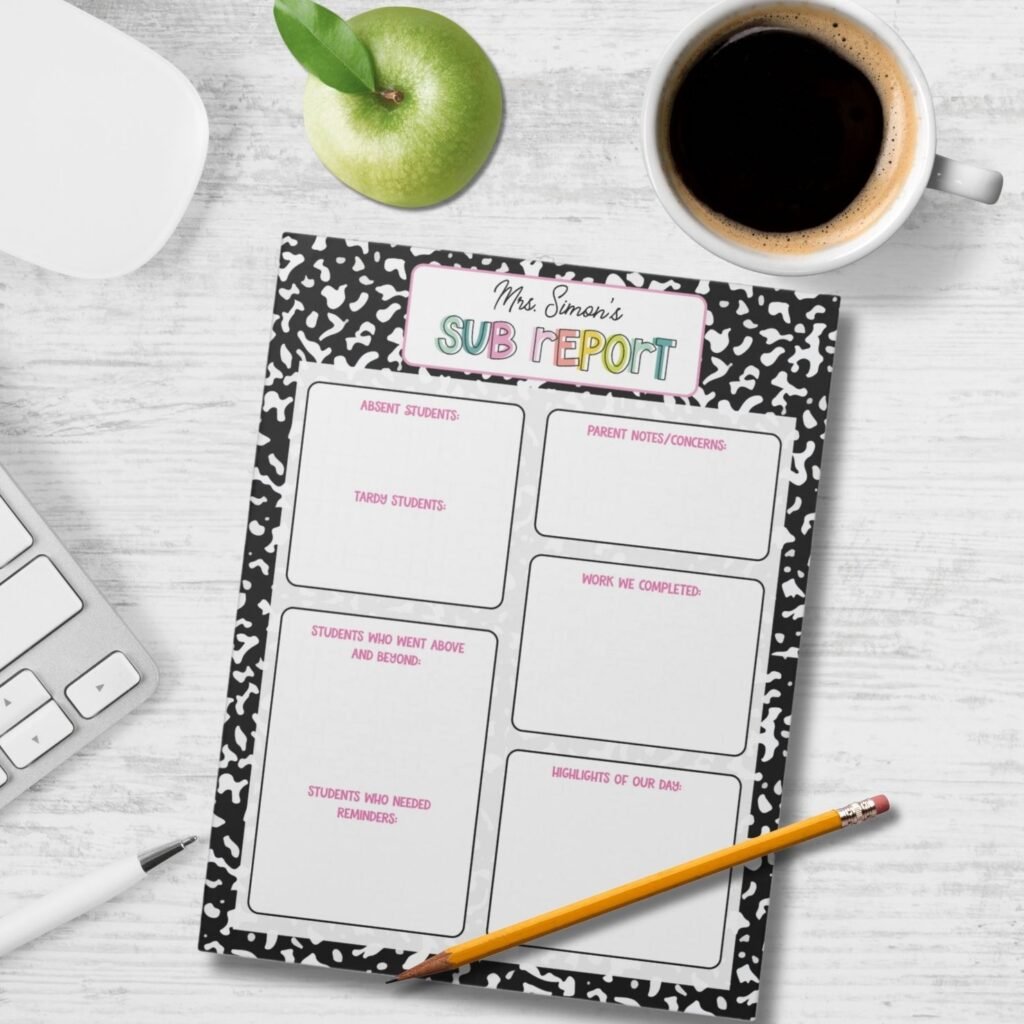
At the end of the day, document what went well and what didn’t. Teachers appreciate knowing how their class behaved, who stood out positively, and what was covered or was not able to be completed. This not only helps the regular teacher but also builds your reputation as a dependable, professional sub who communicates clearly.
I have sub report note pads and templates available. You can edit your name at the top and it covers the majority of things the teacher will want to know. This makes your note quick and easy so you can go home on time.
8. Reflect After Each Assignment
Every classroom is a learning experience. Reflect on what strategies worked and what you’d tweak next time. After my very first day as a sub, I feel that there are a lot of things I will do differently going forward but am proud of myself for completely stepping out of my comfort zone and trying something new. Over time, you’ll develop your own toolkit of classroom management techniques that work across different grade levels.
Closing: Confidence Comes with Practice
As an ER nurse, I’m used to managing high-stress situations, but I quickly learned that a classroom full of energetic kids is a different kind of emergency. The more you sub, the more confident and calm you’ll become.